Currently under
construction.
We're adding features,
and making the site
available on phones.
Bear with us...
A few things are working.
Try them out
Currently under
construction.
We're adding features,
and making the site
available on phones.
Bear with us...
A few things are working.
Try them out
Epochal Crisis: The Exhaustion of Global Capitalism, (Cambridge UP, 2025)

This is the most recent book from Professor William Robinson, Distinguished Professor of Sociology at the University of California, Santa Barbara. This title is the latest in excellent and ground-breaking titles from Professor Robinson in a distinguished career, where he began writing books on United States intervention into Nicaragua in the late 1980s and early 1990s, expanding this focus on United States hegemony more broadly in the ground-breaking book Promoting Polyarchy in 1996, up to then grappling with the totality of the capitalist world system more recently in titles such as The Global Police State in 2020, Can Global Capitalism Endure in 2022, and War, Global Capitalism and Resistance in 2024, alongside many other books.
Professor Robinson’s latest installment, which we discuss in this episode, Epochal Crisis, tracks the multifactorial crises that are impacting the global capitalist system today, across economic, social, ecological, political, and other dimensions, and how these intersecting and overlapping crises are degrading or exhausting the ability for capitalism to renew itself. This contemporaneous epochal crisis, as Professor Robinson carefully details, is catalyzing morbid symptoms that express themselves as wars, unprecedented violence, ecological emergencies, rock-bottom political legitimacy, and a host of other dangerous and cataclysmic effects.
Epochal Crisis is both a wide-ranging and extensive investigation into the current, overlapping and intersecting crises that are plaguing the world capitalist system, as it appears in its final, violent death throes, and also a highly engaging work that is easy to digest and will help you understand the very naked reality of the capital crisis that is so obvious to us all today. Thankfully, Professor Robinson also addresses what we can do in this latest, perhaps final, epochal breakdown of the capitalist system, to find some revolutionary hope in these dark times. GO HERE
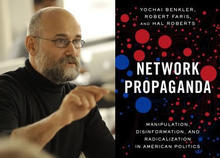
FREEDOM IN THE COMMONS: TOWARDS A POLITICAL ECONOMY OF INFORMATION, a lecture by Yochai Benkler, originally delivered as the Second Annual Meredith and Kip Frey Lecture in Intellectual Property at Duke Law School on March 26, 2002. It outlines two fundamental social aspects of the emerging economic-technological condition of the networked information economy: the economic—concerned with the organization of production and consumption in this economy, and the political—concerned with how we pursue autonomy, democracy, and social justice in this new condition. ACCESS HERE
Reading Marx’s Capital
These six 2016 lectures are part of Distinguished Professor David Harvey’s Lecture Series “Marx and Capital: The Concept, The Book, The History. ALSO: Harvey’s lectures on Marx’s Grundrisse Access Here
The Shock Doctrine
75-Minute Film Version of Naomi Klein’s Anti-Capitalist Book. Access Here
THE CORPORATION
 An excellent 2003 documentary examining the modern-day corporation. This is explored through specific examples. It shows the development of the contemporary business corporation, from a legal entity that originated as a government-chartered institution meant to affect specific public functions to the rise of the modern commercial institution entitled to most of a person’s legal rights. It shows a few examples of ‘high road’ corporations but mainly reveals the downside for people and planet. 2.5 hours. Access Here
Debt: The First 5000 Years For thousands of years, the struggle between rich and poor has largely taken the form of conflicts between creditors and debtors—of arguments about the rights and wrongs of interest payments, debt peonage, amnesty, repossession, restitution, the sequestering of sheep, the seizing of vineyards, and the selling of debtors’ children into slavery. By the same token, for the past five thousand years, popular insurrections have begun the same way: with the ritual destruction of debt records—tablets, papyri, ledgers, whatever form they might have taken in any particular time and place. Enter Anthropologist David Graeber’s Debt: The First 5,000 Years (July, ISBN 978-1-933633-86-2), which uses these struggles to show that debt is also a history of morality and culture. 80-minute documentary Access Here
Wage Crisis: The USA’s New Underclass:
T he American working underclass has been under extreme tension for some time. Now with politicians not inclined to increase the minimum wage and food stamps stretched thin, the social ramification could be disastrous. The recession is not over for most American citizens. Most Americans have seen their salaries hibernate or go down since 2008. The American average income of a full-time male worker today is lower than 40 years ago. 26-minute video HERE
Straight Talk About the Next American Revolution
May 30, 2013: Gar Alperovitz speaks about why the time is right for a revolutionary, new-economy movement — what it would mean to democratize the ownership of wealth, what it will take to build a new system to replace the decaying one, and more. What people may be surprised to find out is that this revolution is already well underway in the United States, with organizations like worker-owned cooperatives, credit unions and more already taking up a huge portion of the economy. Gar’s latest book is What Then Must We Do? Straight Talk About the Next American Revolution. 75-minute video lecture. ACCESS HERE
Finance Capital: Parasites over Enterprise. This 15-minute video interview is an excellent discussion starter on the need for a popular front vs Wall St speculators, austerity and war. Conducted by Paul Jay of the Real News Network, the subject is Gerald Epstein, co-director of the Political Economy Research Institute (PERI) and Professor of Economics. He received his Ph.D. in economics from Princeton University. He has published widely on a variety of progressive economic policy issues. Access Here
Trump’s Deportation Agenda Will Destroy Millions Of Jobs: Both immigrants and U.S.-born workers would suffer job losses, particularly in construction and child care. –Economic Policy Institute, by Ben Zipperer. Access Here