Currently under
construction.
We're adding features,
and making the site
available on phones.
Bear with us...
A few things are working.
Try them out
Currently under
construction.
We're adding features,
and making the site
available on phones.
Bear with us...
A few things are working.
Try them out
Just months into Donald Trump’s second term, it’s clear that his administration is transforming our government. The slashing of health and safety net programs like Medicaid and SNAP will devastate millions of families. The gutting of regulatory oversight will have equally profound and far-reaching effects: Americans will face more exploitation and harm at work, more consumer fraud, more discrimination, and more exposure to tainted food and climate disaster. Even as government is being dismantled in these domains, in other areas the administration is weaponizing the coercive power of the state in terrifying ways. ICE conducts militarized and lawless immigration enforcement raids across the country, while the Department of Justice and other federal agencies target universities, private firms, and civil society organizations that are seen as hostile to Trump, or too committed to progressive causes.
This slew of policy changes is bound by two features. First, they express and help realize a distinctly reactionary vision of American society. This is not just authoritarianism for its own sake—or for the sake of mere corruption, though there has been plenty of that. The goal is to undo, even preclude, efforts at advancing racial, gender, and economic equality, however modest. Second, this vision of a hierarchical social order is being forged through a parallel effort to remake foundational political institutions. Some institutions, from safety net programs to regulations on corporate pollution and malfeasance, have been dismantled, whether through mass firings or defunding. Other institutions, like ICE, have been supercharged. Still other transformations have converted presidential discretion over policies like tariffs or enforcement decisions into tools of personal rule by fiat, based on little more than Trump’s whims. And while Trump has lost the vast majority of legal cases in district courts, his more sophisticated judicial backers have used technical Supreme Court maneuvers and stretched legal theories to fast-track the administration’s remaking of state and society.
These transformations will have a much deeper impact than any one policy. Agencies needed to curb exploitation or protect workers or defend civil rights will be hard to rebuild. And with each breathless headline about a new executive order, the public is increasingly acculturated to believe that rule-by-fiat and authoritarian crackdowns are simply how politics work now. The damage to the very concept of law and governance will be difficult to undo.
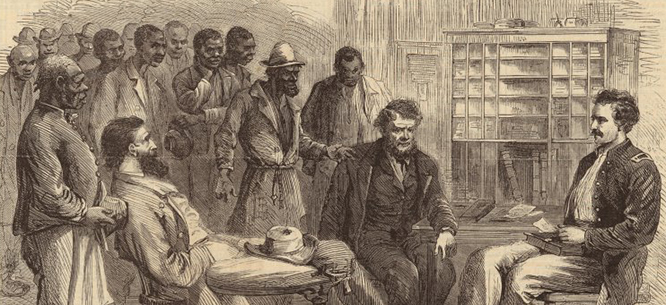
Yet there is another American political tradition that we can draw on in this moment—an emancipatory, democratic tradition that has driven major transformations of our country through bottom-up, movement-driven struggle, often against deeply hostile and institutionalized power structures. Emancipation, abolition, and the First Reconstruction; the New Deal; and the civil rights era all mark moments when social movements and policymakers shifted power away from dominant interests and helped move in the direction of equal dignity and standing for all Americans. While these transformations were imperfect, what is perhaps most remarkable—and most often overlooked—is just how durable some of them have been. As reactionaries attempt to dismantle the achievements of the New Deal and the civil rights movement today, it is important to remember that these transformations occurred in the face of intense opposition from their very beginnings. (Continued)